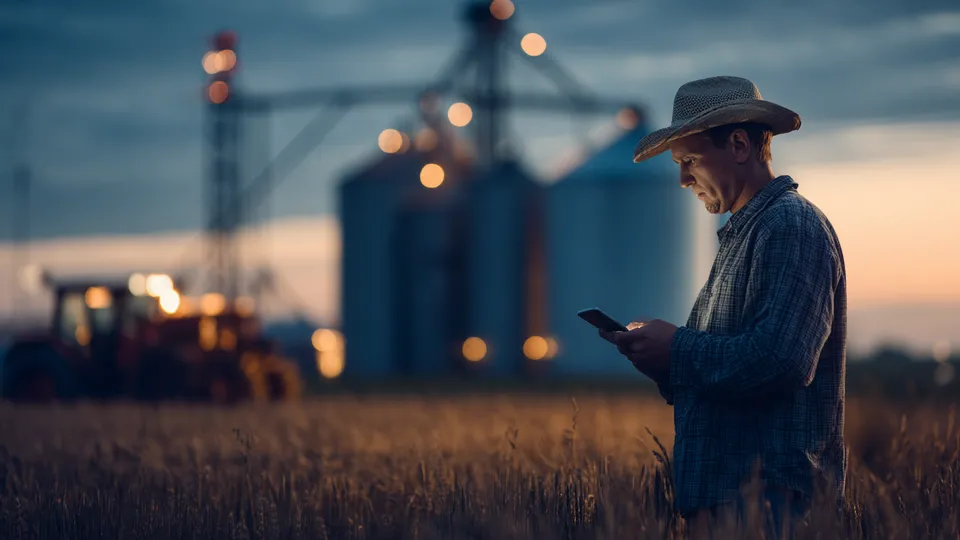
At first light on a chilly April morning, a farmer in the RM of Elton scrolls through a map on his tablet and watches a drone's live feed drift over a parcel he has farmed for three decades. He taps a widget to change seeding rates across a patch of heavy clay and, without leaving the cab of his truck, checks messages from an agronomist in Brandon. The hardware hummed, the data pulsed, and a life shaped by soil and weather now moves in parallel with streams of code and coverage maps.
This is not a Hollywood image of rural futurism; it is everyday life across Westman. In Brandon, Dauphin and townships that line the Trans-Canada arcs to the west, residents and institutions are adopting technologies that reshape how people work, learn and receive care. The story is not only about fiber strands and towers. It is about teachers who file lesson plans over video calls, nurses who monitor patients at home, Main Street shopkeepers who build online customers from three provinces away, and seniors who accept a tablet for the first time so they can see their grandchildren.
The shift accelerated during the pandemic. Schools improvised remote instruction, the Brandon Regional Health Centre expanded virtual visits, and small businesses were forced online to keep doors open. Federal and provincial funding—most notably programs under the Universal Broadband Fund—poured into projects intended to close connectivity gaps. Locally, cooperatives and providers, such as Westman Communications, have invested in last-mile infrastructure, while Brandon University and Assiniboine Community College are training a workforce that understands both rural realities and digital tools.
Precision agriculture sits at the forefront of adoption. Farmers describe the transition not purely as efficiency but as risk management. "When you can see moisture and variability across a field in real time, your decisions change," says one grower, leaning on a phrase repeated in meetings and on porches: data helps hedge against what the weather cannot be trusted to do. Drones, soil probes and satellite analytics have allowed smaller operations to try practices once limited to large corporate farms—variable-rate seeding, targeted nitrogen applications and crop-health diagnostics that can save money and reduce environmental impact.
Healthcare, too, has a new rhythm. Telehealth triage and follow-up appointments make specialist care more accessible for patients who would otherwise face a three-hour round trip. At the clinic level, community nurses use portable tablets to relay patient readings to physicians in Brandon, often reducing unnecessary transfers. For families, those video visits mean grandparents can remain in their homes with more confidence; for clinicians, it is a way to stretch scarce rural resources.
Yet the promise of collides with a stubborn reality: uneven access. Towns within easy reach of Brandon have seen fiber laid and speeds climb, but hamlets beyond a certain radius still contend with patchy LTE or expensive satellite plans. For many residents, the barrier is not only physical infrastructure but also cost and digital literacy. Older community members, who often control farmland and storefronts, may feel wary of platforms that require new skills and diminish traditional face-to-face commerce.
Local institutions have emerged as translators between promise and practice. Public libraries across Westman run "digital navigator" programs, teaching seniors to video-call and showing entrepreneurs how to list products online. High school coding clubs and college bootcamps are pairing students with small businesses for real projects—an exchange that injects fresh talent into the local economy while giving students direct exposure to community needs.
Human stories illustrate both gains and gaps. A bakery in Virden that began selling sourdough loaves via social media now ships weekly boxes as far as Winnipeg, enabling the owner to retain staff and expand benefits. A young mechanic learned to program CNC machines at Assiniboine and now programs equipment for welders in town, sidestepping the out-migration that once hollowed Main Street. Conversely, a remote hamlet still depends on a satellite feed so slow that a video consultation must be scheduled during off-peak hours—an indignity that adds stress to already precarious situations.
Policy and partnership will determine whether these technological threads weave into a durable fabric. Investments in broadband infrastructure need to be paired with subsidies or flexible pricing models for low-income households. Digital-literacy initiatives must be sustained and scaled. Local governments and community organizations are experimenting with models: equipment-lending libraries, municipal Wi-Fi in public parks, and co-operative ownership of last-mile fiber.
Looking ahead, Westman's adoption of technology offers both an economic lifeline and a civic test. Technology can enhance agricultural stewardship, keep people connected to care, and create new pathways for entrepreneurism. But if access and skills are uneven, innovations risk reinforcing existing inequalities rather than erasing them.
The most compelling stories are those that keep human faces at the center. In the end, the arc of Westman's technological change will be judged not by gigabits per second but by whether a retiree can call a doctor without a bus trip, whether a high-schooler can code a local business’s inventory system, and whether a family business can survive the next market shock. Communities here are not waiting for a distant future. They are building it—practically, imperfectly, and with a clear sense that technology's true value is its capacity to deepen connection, not replace it.
If Westman can pair infrastructure with inclusive programs and local ingenuity, the region won’t just catch up. It will model how small towns can shape technology to fit their rhythms and values—not as passive users, but as active designers of their own futures.