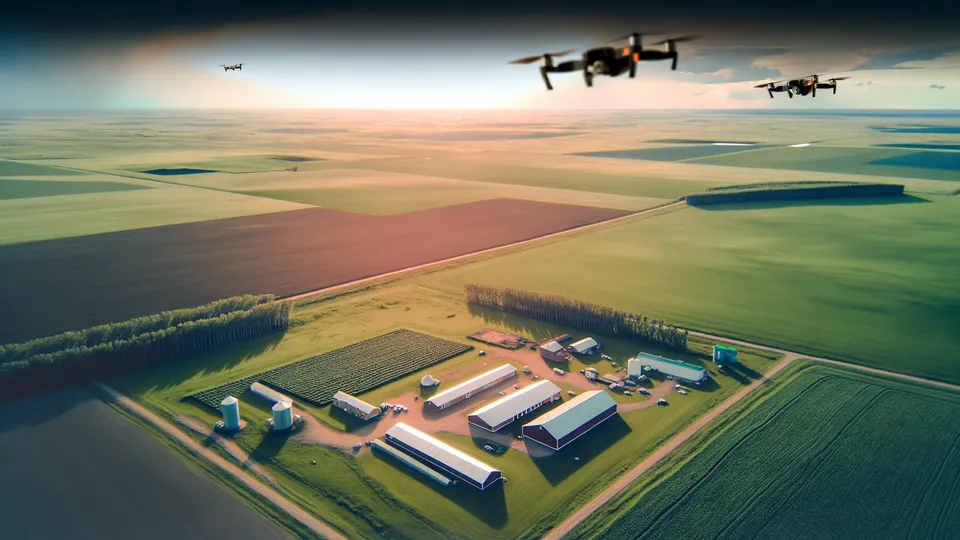
Under the vast expanse of the Manitoba sky, a quiet revolution is taking root. Here, in the Westman region, farmers are not merely tilling the soil. They are sowing the seeds of change, harnessing innovative technologies to safeguard their future and, by extension, the future of communities that have, for generations, been shaped by the land.
Take Wyatt Armstrong, a third-generation farmer from Virden. His grandfather tilled the fields with horse-drawn ploughs. His father embraced mechanization. And Armstrong himself? He's part of a new vanguard. Today, on his 2,000-hectare farm, drones map the land, artificial intelligence predicts crop yields, and soil sensors provide real-time data that informs sustainable farming practices.
'The land may be the same, but the tools we use, they've transformed,' Armstrong says. 'With these technologies, we can farm not just more effectively but more responsibly too.'
The result is not just a boost to Armstrong's bottom line – his yields are up seven percent this year – but also a reduction in his environmental footprint. By using to optimize irrigation, for example, Armstrong has cut his water use by nearly a third. It's a tangible example of how agricultural can have wider societal benefits.
And Armstrong isn’t alone. Throughout the Westman region, this fusion of tradition and technology is empowering farmers. In Neepawa, Susan Kozyra uses a soil-monitoring app to practice precision farming, reducing chemical use and protecting the local river ecosystem. In Melita, Jack Tully’s self-driving tractor is a testament to the possibilities of automation, reducing labour costs and increasing productivity.
These individual stories of innovation weave a broader narrative about the resilience and adaptability of the Westman region. They're not just about farming more efficiently; they're about building stronger, more sustainable communities.
As climate change threatens traditional farming practices, this wave of innovation is more than just a boon—it's a necessity. It's a way for farmers to adapt, to weather uncertain futures, and to continue playing their crucial role in feeding the nation.
Looking forward, the seeds of change sown in Westman's farmlands promise a rich harvest. They offer a model for other regions grappling with similar challenges. And most of all, they underscore the integral role that farmers—not just as custodians of the land, but as innovators and community pillars—will continue to play as we navigate a future fraught with uncertainties.
'The future belongs to those who prepare for it today,' Armstrong says as he watches his drones returning to their base, their day's work complete. In Westman's sprawling fields, that preparation is well underway.