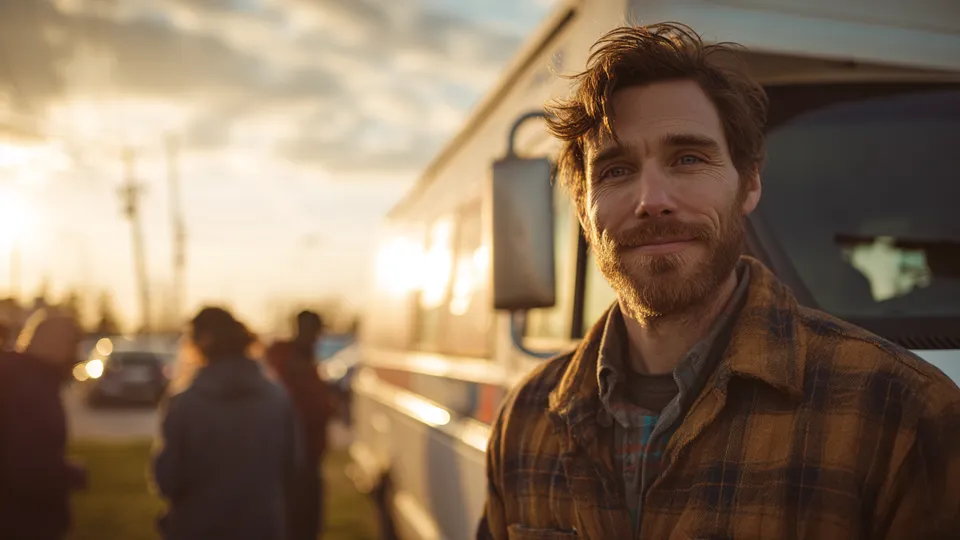
Nadia Rahman remembers the moment she decided to stop talking about fixing rural healthcare and start doing it. It was 2017, a cold snap that left many farm households with broken furnaces, and a long line of people in the Brandon emergency department waiting for something that was not an emergency. Nadia, then a project manager at a provincial health NGO, sat in her car outside the hospital and watched a woman with a toddler turn away, exhausted and unsure whether to seek help.
'You don't have to be sick to be sick of the system,' she says now, laughing softly. The line stuck with her. So did the faces of patients who were bounced between family doctors, out-of-town specialists and the ER because the right care at the right time simply wasn't available in Westman. Four years later, Nadia opened Prairie Health Collective, a hybrid clinic and community enterprise that has evolved into a node of care, education and cultural navigation across Brandon, Neepawa and Rivers.
The work reads like a patchwork: a converted delivery van retrofitted into a mobile clinic, telehealth kiosks installed in library lobbies, a nurse practitioner-led clinic on Princess Ave., and a training rotation with Brandon University's nursing program. But the result is more than the sum of its parts. It is a network designed to meet people where they are — geographically, economically and culturally.
'People tell us where it hurts,' says Nadia. 'Then we listen, and we try to build something that answers that specific pain.'
One concrete example is the mobile unit. On Wednesdays, the van rolls into the parking lot of a seniors' apartment block on Rosser Ave. A community worker meets residents at the door; a nurse practitioner performs medication reviews and chronic disease checks; a mental health navigator sits in the corner and takes referrals. For clients like Evelyn McKay, 74, who has COPD and lives alone, the van was transformative.
'I couldn't get to the clinic in winter,' Evelyn says. 'They come to us. We talk about my pills, my breathing, and the nurse helps me phone the specialist. I don't feel like a number anymore.'
Prairie Health Collective's model also stitches together cultural competence. Nadia prioritized hiring staff who reflect the community: Indigenous health liaisons, bilingual front-line workers, and practitioners familiar with farming life. That means when a young Indigenous mother in Rivers walks in, she is offered the choice of a culturally grounded appointment and an elder-led support group. The choice matters; it changes the likelihood that someone will engage with care rather than avoid it.
Partnership has been Nadia's strategic tool. Her team negotiated a formal placement program with Brandon University that gives nursing and social work students structured rural clinical exposure. That arrangement has two effects: students gain experience in community-based care, and the clinic gains a rotating pool of energetic learners who help deliver preventive outreach. 'You can't scale responsiveness without training the next generation where the needs are,' Nadia says.
Measuring impact has been intentional, not incidental. Prairie Health Collective tracks appointment follow-through, reduction in avoidable ER visits among their patients, and vaccine uptake in targeted neighborhoods. While provincial policy and funding pressures remain, the data allow Nadia to make concrete cases to funders and municipal leaders. The results are quietly persuasive: patients report higher satisfaction; local ER teams report fewer non-emergency presentations from areas where the Collective has active outreach; and community partners point to improved care coordination for people with multiple chronic conditions.
There have been setbacks. Recruitment is a constant challenge, broadband can be brittle in outlying towns, and the funding landscape requires Nadia to juggle grants, municipal contracts and conservative budgeting. Yet these constraints have fed another strand of her approach: practicality. Rather than invent a model that relies on idealized infrastructure, Nadia builds for the constraints and strengthens the weakest links — internet access, transportation and interpreters — in incremental ways.
The human element remains the throughline. Nadia speaks about the team as if naming them pushes the work forward: Marisol, the intake worker who learned Cree phrases to welcome clients; Ben, the van mechanic who also sets up telehealth hardware; and Dr. Lyle, a family physician who does rotating teleconsults for complex chronic care. 'They're not my staff,' Nadia corrects. 'They're the community. We just organize it.'
Looking ahead, Nadia envisions a stabilization fund for community-led clinics across Westman, a realistic policy instrument that could support without punishing it with short funding cycles. She also wants to formalize mentorship for rural clinical leadership: a pipeline that keeps local talent working here, rather than seeing rural practice as a prelude to moving to Winnipeg.
'The question isn't whether rural communities can have good care,' she says. 'It's whether we value the particular work it takes to make that care accessible. If we do, we have to back it with stable investment — and the humility to learn from those who live the gaps every day.'
In Brandon and its neighboring towns, Prairie Health Collective is not a panacea. But it is a living argument for place-based solutions: small, iterative, human-scale and stubbornly practical. For people who once faced long waits and longer travels, the Collective has done something subtler and more durable — it has rearranged the rhythms of care, so that help arrives not as an emergency but as part of everyday life.